The FPA Friday Digest
22 May 2026
In this week's FPA Friday Digest ...
As packaging reforms continue moving from policy development into operational delivery, this week’s developments once again highlight the growing importance of clarity, consistency and confidence across the wider regulatory landscape.
Within both the UK and Europe, attention is increasingly shifting beyond legislative ambition alone toward the practical realities of implementation. Questions around enforcement capability, packaging classification, verification systems, infrastructure readiness, delivery sequencing and cross-border consistency are becoming increasingly central as businesses adapt to a rapidly evolving compliance environment.
This week’s content around waste crime enforcement, recycled content certification, Deposit Return Scheme implementation and parliamentary scrutiny of pEPR all reinforce a common theme: successful circular economy policy will depend not only on setting ambitious targets, but also on ensuring the interconnected systems supporting them are proportionate, transparent, properly coordinated and operationally workable in practice.
There is also growing recognition that packaging regulation is now influencing wider commercial and strategic decision-making across the supply chain. From hospitality operators facing continued economic pressure, to global brands reassessing packaging formats and recyclability strategies, businesses are increasingly balancing environmental obligations alongside cost pressures, operational resilience and long-term investment planning.
At the same time, the growing focus on certification, evidential standards and data integrity reflects how packaging regulation is becoming increasingly data-driven and interconnected. As these systems evolve, maintaining trust in reporting, enforcement and compliance processes will be essential to supporting both environmental progress and fair competition across the sector.
The FPA will continue working closely with members, policymakers and stakeholders to help ensure packaging reforms deliver meaningful environmental outcomes while remaining practical, proportionate and achievable for the businesses responsible for implementing them.
Supply chain voices concern over potential PRN market changes
HMRC has launched a 12-week consultation exploring whether mandatory certification requirements should be introduced for mechanically recycled plastic packaging used in Plastic Packaging Tax (PPT) declarations, amid growing focus on compliance assurance, material traceability and evidential standards
The consultation considers whether formal certification systems should provide a proportionate and effective method for evidencing recycled content claims, with ministers specifically highlighting concerns around the potential risks of error and fraud within complex international supply chains.
According to the consultation, government is seeking views on how any certification regime could operate in practice, the potential impact on businesses, implementation timescales and the wider implications for packaging manufacturers, importers, recyclers, waste management companies and local authorities.
The move reflects increasing regulatory pressure for stronger verification, transparency and data integrity and evidential standards across packaging and recycling systems as governments increasingly rely on producer reporting and environmental performance data to support circular economy policies.
Industry stakeholders are likely to watch developments closely given the potential implications for audit requirements, material sourcing, administrative burden and wider supply chain verification processes.
The government would like to hear from businesses within the plastics supply chain including mechanical plastic recyclers, tax advisers, trade and professional bodies, waste management companies and local authorities, and other interested parties.
The consultation will run from 18 May 2026 to 10 August 2026. Government will also be arranging meetings with key stakeholders and interested parties who may be affected by the proposals in this consultation. If you would like to be included in a consultative meeting, please contact HMRC at teamindirecttaxdesign@hmrc.gov.uk.
FPA comment: “As packaging regulation becomes increasingly data-driven, confidence in recycled content reporting and environmental claims will depend on robust, proportionate and internationally workable verification systems. Businesses need clarity and consistency around evidential requirements – particularly where complex global supply chains are involved – to help ensure compliant operators are not placed at a competitive disadvantage".
Parliamentary scrutiny grows around pEPR implementation and packaging classification
Parliamentary scrutiny of packaging Extended Producer Responsibility reforms continued this week through a series of written questions examining enforcement oversight, packaging classification, hospitality-related packaging and the practical operation of pEPR rules.
The questions focused on how Defra oversees Environment Agency enforcement activity, whether current household and non-household packaging classifications accurately reflect real-world usage, and how hospitality packaging is being assessed under the regulations.
In response, Circular Economy Minister Mary Creagh indicated that Defra officials are continuing to work closely with regulators to monitor implementation challenges and acknowledged that future amendments to the regulations may be required where issues emerge.
The exchanges highlight continuing industry and political interest in how packaging reforms are operating in practice as businesses adapt to increasingly complex reporting and compliance requirements.
FPA comment: “It's encouraging to see increasing parliamentary attention being given to the practical operation of pEPR, particularly around packaging classification, enforcement oversight and the treatment of hospitality-related packaging. The FPA’s own research and member feedback has consistently highlighted concerns around operational complexity, classification consistency and the importance of ensuring regulations reflect real-world supply chains and usage patterns. Ongoing dialogue between government, regulators and industry will be essential as lessons from implementation continue to emerge”.
Government and regulators step up waste crime crackdown
Government and the Environment Agency have announced a series of measures aimed at strengthening action against increasingly sophisticated waste crime activity, amid growing concern over the impact of rogue operators on legitimate businesses, the environment and confidence in the wider circular economy system.
This week government confirmed plans to introduce legislative changes aimed at closing loopholes within the waste carrier licensing regime, including tighter identity verification measures and stronger powers to prevent unsuitable operators from obtaining permits. The move follows criticism of weaknesses in existing registration processes after reports emerged that fictitious applicants – including one using the name ‘Cow’ – had successfully obtained waste carrier licences.
Alongside the reforms, the Environment Agency has also confirmed plans to introduce revised charging measures and a new waste crime levy intended to help fund increased enforcement and compliance activity across the sector.
The announcements also come amid renewed scrutiny of regulatory oversight following findings from the Office for Environmental Protection (OEP), which reportedly identified significant shortcomings in Environment Agency waste inspection activity and warned that gaps in monitoring and enforcement could undermine environmental compliance objectives.
Ministers said waste crime is becoming increasingly complex and financially damaging, while consultation respondents broadly supported tougher enforcement action, albeit with some concerns around proportionality and the additional cost burden on compliant businesses.
The announcements form part of a wider shift toward tighter compliance oversight and more data-driven regulation across the waste and packaging sectors, including digital waste tracking and expanded producer responsibility reforms.
The developments are likely to be welcomed by many compliant businesses seeking a more level playing field, although FPA members will also be watching closely to see whether stronger powers, additional funding and tougher oversight translate into more visible and consistent enforcement activity in practice.
Further discussion on Environment Agency inspection effectiveness and enforcement oversight will take place during an upcoming free industry webinar hosted by the Environmental Services Association on 9 June.
FPA comment: "Effective enforcement and regulatory visibility are essential to maintaining confidence in packaging reforms and ensuring compliant businesses are not placed at a competitive disadvantage. With packaging and waste systems becoming increasingly complex, consistent enforcement across the supply chain will become even more important".
Government consults on certification for recycled plastic claims
HMRC has launched a 12-week consultation exploring whether mandatory certification requirements should be introduced for mechanically recycled plastic packaging used in Plastic Packaging Tax (PPT) declarations, amid growing focus on compliance assurance, material traceability and evidential standards
The consultation considers whether formal certification systems should provide a proportionate and effective method for evidencing recycled content claims, with ministers specifically highlighting concerns around the potential risks of error and fraud within complex international supply chains.
According to the consultation, government is seeking views on how any certification regime could operate in practice, the potential impact on businesses, implementation timescales and the wider implications for packaging manufacturers, importers, recyclers, waste management companies and local authorities.
The move reflects increasing regulatory pressure for stronger verification, transparency and data integrity and evidential standards across packaging and recycling systems as governments increasingly rely on producer reporting and environmental performance data to support circular economy policies.
Industry stakeholders are likely to watch developments closely given the potential implications for audit requirements, material sourcing, administrative burden and wider supply chain verification processes.
The government would like to hear from businesses within the plastics supply chain including mechanical plastic recyclers, tax advisers, trade and professional bodies, waste management companies and local authorities, and other interested parties.
The consultation will run from 18 May 2026 to 10 August 2026. Government will also be arranging meetings with key stakeholders and interested parties who may be affected by the proposals in this consultation. If you would like to be included in a consultative meeting, please contact HMRC at teamindirecttaxdesign@hmrc.gov.uk.
FPA comment: “As packaging regulation becomes increasingly data-driven, confidence in recycled content reporting and environmental claims will depend on robust, proportionate and internationally workable verification systems. Businesses need clarity and consistency around evidential requirements – particularly where complex global supply chains are involved – to help ensure compliant operators are not placed at a competitive disadvantage".
WRAP: Circularity increasingly linked to wider economic resilience
WRAP has argued that circular economy policy should increasingly be viewed as part of the UK’s wider economic resilience and resource security strategy, particularly amid growing geopolitical uncertainty and supply chain pressure.
The analysis suggests that improving material recovery, reuse and recycling systems could help reduce exposure to volatile global commodity markets while supporting domestic manufacturing capability and long-term resource security.
The commentary reflects a growing shift in sustainability discussions beyond environmental targets alone, with increasing focus on how packaging, recycling and circular economy systems contribute to industrial resilience, investment confidence and future economic competitiveness.
Pressure grows over inclusion of glass in Welsh DRS plans
Pressure is reportedly mounting on the Welsh Government to reconsider proposals to include glass within Wales’ future Deposit Return Scheme (DRS), amid concerns over operational complexity, cross-border consistency and potential cost impacts for businesses and consumers.
Retailers and industry stakeholders have warned that including glass could create additional logistical and administrative burdens compared with schemes planned elsewhere in the UK, with concerns also emerging around the potential impact on wine and other bottled product pricing.
Industry concerns include storage requirements, handling costs, collection infrastructure and the risk of increased complexity for businesses operating across multiple UK markets.
The debate highlights continuing tensions around consistency and interoperability as devolved administrations move forward with differing approaches to packaging and recycling reforms.
FPA comment: “As regulatory and reporting requirements become more complex, the sector is increasingly looking towards AI, automation and digital systems to improve operational efficiency, data quality and compliance capability".
Hospitality businesses warn of mounting commercial pressure
The hospitality sector is continuing to face difficult trading conditions despite extensive cost-control efforts, according to new industry commentary highlighting ongoing pressure on sales, operating margins and consumer demand.
Kate Nicholls, chair of UKHospitality warned that many operators are “working incredibly hard just to stand still” as businesses contend with rising labour, energy and supply chain costs alongside cautious consumer spending. Separate warnings from hospitality groups have also highlighted growing concern around the wider economic outlook, employment pressures and weakening market confidence.
The comments underline the challenging commercial backdrop against which wider packaging, recycling and compliance reforms are being introduced across the foodservice and hospitality sectors.
For both packaging suppliers and operators, the combination of regulatory change, operational cost pressure and continued market uncertainty is likely to remain a key consideration throughout 2026.
NEWS FROM EUROPE
Questions raised over consistency of SUPD implementation
Fresh questions have been raised over how consistently the EU Single-Use Plastics Directive (SUPD) is being implemented across member states, amid wider debate around enforcement, reporting requirements and regulatory alignment within European packaging policy.
According to industry analysis, significant differences remain between national approaches to interpretation, compliance and enforcement, raising concerns around market fragmentation and uneven obligations for businesses operating across multiple jurisdictions.
The discussion comes as packaging companies continue preparing for wider implementation of the EU Packaging and Packaging Waste Regulation (PPWR), with many stakeholders warning that inconsistent application of existing legislation risks creating additional complexity and uncertainty.
FPA comment: "Consistency and clarity will be critical to the long-term effectiveness of packaging regulation across Europe. Diverging interpretation and enforcement between jurisdictions risk increasing complexity for businesses while undermining confidence in the wider regulatory framework.”
Study highlights mounting SME concerns over fragmented EU packaging compliance
A new study commissioned by Amazon has highlighted the growing complexity facing small businesses attempting to comply with pEPR requirements across the EU, as implementation of the PPWR accelerates.
The research found significant differences in registration systems between member states, with businesses facing varying data requirements, authentication processes, authorised representative obligations and reporting structures depending on the country concerned.
According to the study, 64 unique registration data fields were identified across 10 EU markets, with more than half being country-specific requirements rather than harmonised EU obligations. The report argues that fragmented national implementation risks creating disproportionate compliance costs for SMEs and smaller exporters operating across multiple markets.
The debate has also extended to how compliance information is collected and administered, with Amazon reportedly arguing that online marketplaces could play a greater role in providing packaging registration data and supporting compliance processes for smaller businesses operating across multiple EU jurisdictions.
FPA comment: "The findings are likely to reinforce wider industry concerns around regulatory complexity, harmonisation and the practical challenges of implementing increasingly data-intensive packaging compliance systems across Europe".
FAO warns stronger oversight needed for recycled plastic food packaging
The UN Food and Agriculture Organization (FAO) has warned that growing use of recycled plastics in food-contact packaging may require stronger oversight, testing and traceability systems to ensure consumer safety.
The report highlights concerns around the potential migration of hazardous substances from recycled plastics into food products, particularly where recycling streams are insufficiently controlled or where packaging has previously been exposed to non-food applications.
The FAO stressed that recycled plastics remain an important part of global sustainability strategies, but said effective regulatory frameworks, improved collection systems and robust decontamination processes will be critical to maintaining confidence in food-contact applications.
The warning comes as packaging businesses across Europe continue adapting to tougher recycled content obligations and recyclability requirements under the PPWR, alongside wider international pressure to increase circular material use.
FPA comment: "This issue is likely to remain a key focus area for foodservice packaging manufacturers and brand owners as policymakers attempt to balance food safety, material circularity and decarbonisation objectives".
INTERNATIONAL STORIES
Five years of EPR implementation offers lessons for emerging packaging systems
A new international review examining five years of EPR implementation has highlighted the importance of clear governance, consistent reporting frameworks and realistic implementation timelines as packaging reforms accelerate globally.
The analysis, published by sustainability platform Trellis, argues that successful EPR systems depend not only on policy ambition, but also on effective coordination between producers, recyclers, local authorities and regulators.
Among the key lessons identified were the need for transparent data systems, stable long-term funding mechanisms, strong stakeholder engagement and clearer communication around operational responsibilities.
The report also warns that fragmented approaches between jurisdictions can create additional administrative burdens for businesses operating across multiple markets, a concern increasingly being raised by packaging producers in both Europe and the UK.
FPA comment: "The findings from this review will resonate with the UK packaging industry as pEPR implementation moves further into its operational phase and attention increasingly turns toward enforcement, reporting consistency and infrastructure readiness".
Study suggests major brand owners preparing significant packaging changes
A recently released L.E.K. Consulting 2026 CPG and Foodservice Brand Owner Packaging Study suggests major global brand owners are preparing substantial changes to packaging formats, materials and sustainability strategies as regulatory pressure and circular economy requirements continue to intensify internationally.
According to the research, businesses are increasingly reassessing packaging design, recyclability, material selection and supply chain arrangements in response to evolving EPR schemes, recycled content targets and wider sustainability expectations.
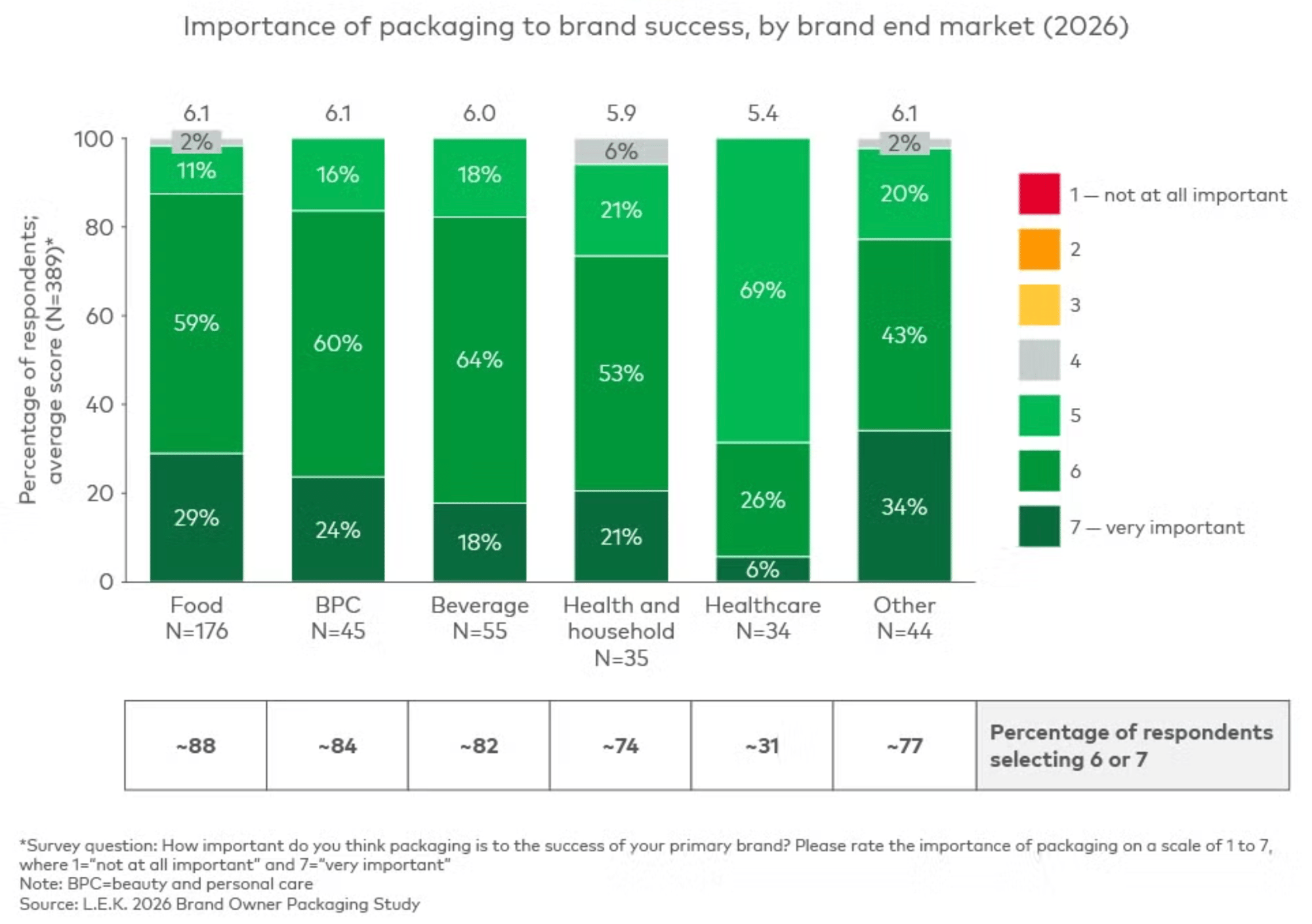
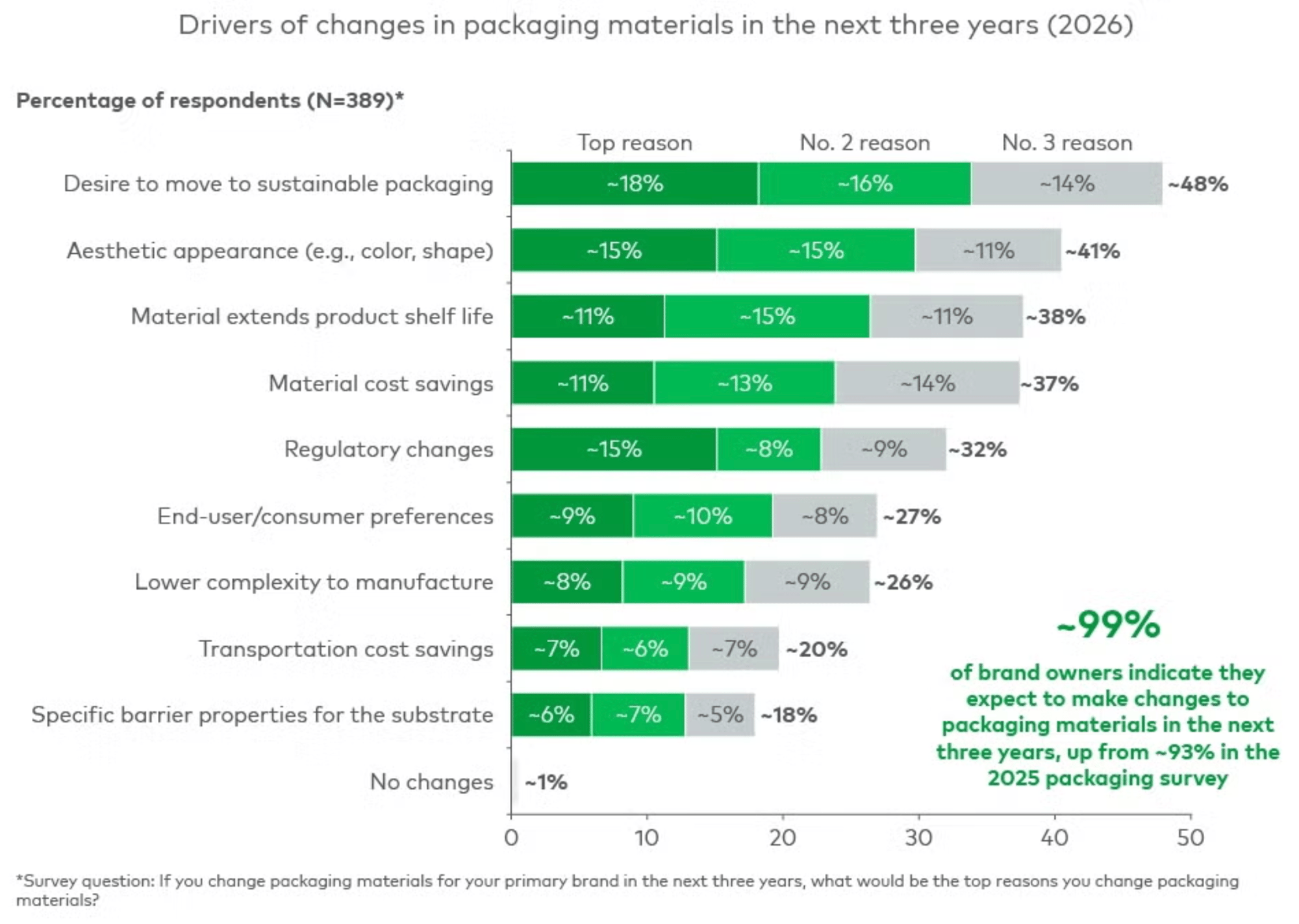
The findings highlight how packaging reform is increasingly influencing broader commercial and operational decision-making across global markets, with businesses balancing environmental targets alongside cost, infrastructure and implementation considerations.
The trend is likely to have significant implications across the wider packaging value chain as companies continue adapting to increasingly complex compliance and reporting requirements worldwide.
FPA comment: "The trend is likely to have significant implications across the wider packaging value chain as companies continue adapting to increasingly complex compliance and reporting requirements worldwide".
EXTERNAL EVENTS AND PARTNER NEWS
Feedback from SPC Impact 2026
Discussions at the Sustainable Packaging Coalition’s SPC Impact 2026 in Nashville highlighted growing recognition across the global packaging sector that future sustainability progress will depend increasingly on system-wide collaboration, infrastructure investment and realistic implementation pathways rather than isolated material changes alone.
Industry leaders speaking at the event reportedly pointed to rising pressure around recyclability, recycled content, reporting requirements and regulatory alignment, while also emphasising the importance of scalable solutions that businesses can implement operationally and economically.
Stakeholder Engagement Forums – June and July dates
Dates and links to the next tranche of Circular Economy Stakeholder Forum meetings. No registration is required, the Microsoft Teams link accompanying each forum will provide direct access to that meeting.
Defra recommends individuals wishing to attend save each link to their calendars. No reminders will be sent.
June Forum – Tuesday 2 June: 14:30 to 16:00 Link to access forum
July Forum – Tuesday 7 July: 14:30 to 16:00 Link to access forum
FPA NEWS AND EVENTS
Confidential input requested
Businesses with concerns about how pEPR is operating in practice – including issues relating to scope, competition, enforcement or unintended consequences, are invited to share their experiences in confidence with the FPA. We also welcome intelligence on potential gaps in scope, market distortions or suspected avoidance behaviours, which can be shared in confidence.
This insight is invaluable in helping us build an accurate picture of how the system is functioning on the ground and in ensuring that industry concerns are effectively represented in our ongoing engagement with Defra, PackUK and the Environment Agency.
Please contact Mike Revell, the executive chair directly via mikerevell@foodservicepackaging.org.uk. All information will be handled sensitively and used to inform our evidence base and policy discussions.
FPA Golf and Activities Day – only a few places remaining ...
FPA members, colleagues and customers are invited to join us on Thursday 11 June for the FPA’s ever-popular annual Golf and Activities Day, taking place at the stunning Breadsall Priory Country Club, just outside Derby.
Many members have already secured their places for what promises to be another excellent day of business networking, entertainment and informal industry engagement. Accommodation at Breadsall Priory is limited and only four rooms remain, so grab yours quickly if you haven't already!
Whether you choose to take part in the Golf Day or the fun-filled ‘Quintessentially English’ Activities Day, the event offers a fantastic opportunity to strengthen existing relationships, make new industry connections and spend time with fellow FPA members, colleagues and customers in a relaxed setting.
Golf Day
Participants will enjoy 18 holes of golf within the beautiful grounds of Breadsall Priory Country Club. The competition will follow the four-ball-better-ball Stableford handicap allowance format, although guests who are not part of a full team can be paired with others on the day.
Following member feedback, there is also the option this year to be placed into mixed-company teams to maximise networking opportunities across the sector.
Prizes will include the FPA Golf Winner’s Cup for the highest individual score, the FPA Golf Champions Shield for the winning team, along with competitions for longest drive and nearest the pin.
Activities Day
For those preferring something a little different, the Activities Day promises plenty of entertainment and friendly competition, with teams taking part in a series of light-hearted challenges including axe-throwing, splat-the-rat, welly wanging, tug-of-war, croquet, boules, races and even duck herding.
Teams consist of five participants, with guests able either to enter as a full team or join mixed-company teams — another excellent way to meet and network with industry colleagues.
The day concludes with prize-giving and an evening barbecue, providing further opportunities to continue conversations and build valuable new business relationships in an informal atmosphere.
To help attendees maximise networking opportunities ahead of the event, the guest list is available to view online.
We are grateful to our sponsors for supporting this year’s event: South Staffordshire Paper Products Ltd (Longest Drive), Conglom International (Nearest the Pin), and Paranova (Activities).
Pricing, the full itinerary and booking details can be accessed via this link
Essential reading
GOV.UK: New reforms to stop waste criminals from exploiting loopholes. Read more here
GOV.UK: Waste crime levy – overview of feedback and the Environment Agency's response. Read more here
GOV.UK: Plastic Packaging Tax – potential certification for mechanically recycled plastic packaging. Read more here
Guardian: Plastic food and drink packaging 'world's most common coastal litter'. Read more here
Packaging Insights: Metal packaging industry faces mounting quality and production pressures. Read more here
letsrecycle.com: OEP finds significant shortcomings in EA waste inspections. Read more here
Packaging Europe: Let online marketplaces provide packaging registration data, says Amazon. Read more here
letsrecycle.com: Recycling sector raises alarm over calls to end PRNs. Read more here
letsrecycle.com: 'Market analysis – caveats upon caveats. Unpacking the latest packaging data. Read more here
Packaging Europe: Are member states complying with the Single-Use Plastics Directive? Read more here
Circular: Supermarkets urged to cap food prices in return for easing packaging policies. Read more here
Packaging Dive: California recycling regulations face further legal challenges. Read more here
The Caterer: Hospitality leaders warn of 'dark clouds on the horizon' as unemployment rises. Read more here
Restaurant: Clover and out – why Michelin's Green Star scheme failed. Read more here
Quote of the week and post of the week
Philip Duffy chief executive of the Environment Agency quoted in letsrecycle.com
“Waste crime is evolving, but so are we. These reforms give us the tools we need to fight back.
“With stronger powers to revoke permits and issue enforcement notices, we will move faster to shut down rogue operators and protect communities from the damage waste crime causes.
“The public are our eyes and ears. If you see fly-tipping or suspect an unlicensed operator, you must report it”.
Packaging News on LinkedIn | @packaging-news
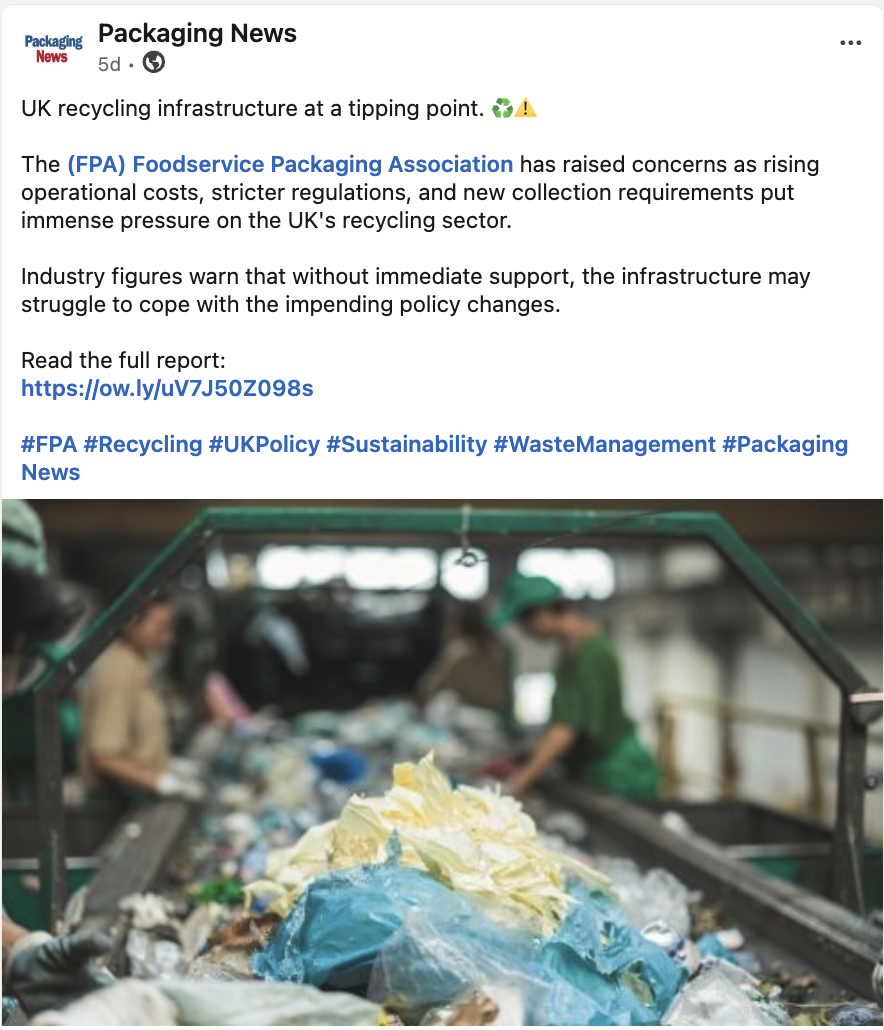
Click on the image above to access and / or comment on this post
Do you know a business that should join the FPA?
The Foodservice Packaging Association represents the interests of its members at all levels and works hard to ensure its members are better represented, better informed and better connected.
FPA members receive early sight of this Digest on Thursday evenings, prior to distribution each Friday morning, and can view an archive of previous Digests within their FPA Dashboards or via this link